|
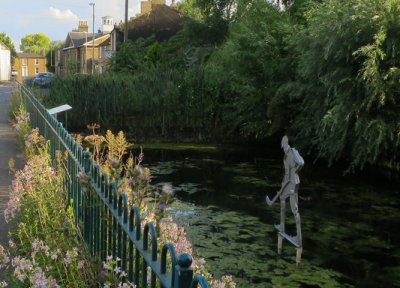
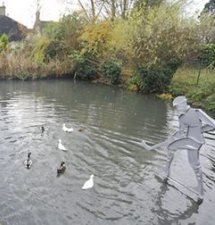
Subject(s): Anonymous
Sport: Bandy
Location: Earith, Cambridgeshire
Unveiled: 2012
Sculptor: Peter Baker
Material: Stainless Steel
Status: In Situ
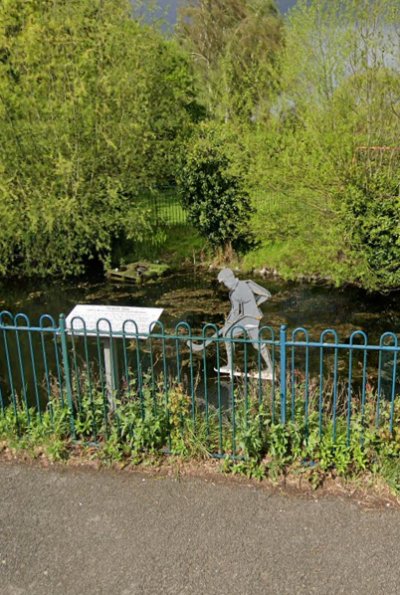
Inscription(s):
Plaque: The Bandy Player. A Sculpture by Peter Baker to commemorate the Queen's Diamond Jubilee June 2012. Bandy, a form of outdoor Ice hockey. can only be played in the hardest winters. Played on an area around the size of a football pitch it was once played on flooded frozen fields such as Buy Fen. Records from 1813 reveal that Bluntisham-cum-Earith had a Bandy team unbeaten for a century at a time when there were no set rules. Rules were agreed at the start of each game as different groups and areas had ther own individual rules. In 1822 Charles Tebbutt of Bury Fen Bandy Club set out official rules and the game of Bandy was properly recognised. There was even a famous exhibition match at Windsor Castle in 1853 watched by Oueen Victoria with Prince Albert playing as one of the goalkeepers. Like ice hockey there are 2 goals and the game is played using a curved stick known as a Bandy, hence the game's name. Bandy is however played with a real ball, unlike ice hockey which uses a cylindrical puck, so is a bigger faster game. Rule No 11 at the time stated: If you drop your stick during a game of Bandy then any of your opponents is entitled to pick it up and throw it away. Once rules were established Tebbutt took the game to Northern Europe and the first International Match took plane in 1891 between Bury Fen Club and Haarlem which Bury Fen Club won. He then took the game to Sweden and the rest is history. Today there are over 800 Bandy clubs in Sweden and it is played enthusiastically throughout Scandinavia, Russia, and North America. In fact, anywhere winter weather provides a frozen landscape large enough to accommodate it. Sadly Fenland weather today rarely provides such conditions to allow the game to be played but every player knows the history of the game and that Bury Fen Club is credited as the true birthplace of modern day Bandy.
Links: None
|